Privacy Guides
Privacy Guides is an impartial, non-profit organization that is focused on building a strong privacy advocacy community and delivering the best digital privacy and consumer technology rights advice on the internet.
 English
 Español
 Français
 עברית
עברית
 Italiano
 Nederlands
 Русский
 中文 (繁體)
 中文 (繁體,台灣)
-
Data Breach Roundup (Oct 16 - 22, 2026)
— This week's data breaches featured a lot of big, well known names from fast food and gaming to schools and government agencies.
-
Signal Vulnerability Allows Audio and Possibly Video to Continue After Hanging Up
— A vulnerability in the secure messenger Signal allows an attacker to cause a call to not properly hang up when you hang up on your end, allowing audio and possibly video to continue being transmitted.

How the US Spies On Its Own Citizens (Without a Warrant)
How did a law meant to target foreign spies turn into a domestic surveillance system sweeping up millions of ordinary Americans without a warrant?
2026 Email Aliasing Tier List
Your email address is exposed! In this video we break down the best tools for protecting your email address and rank them from S-tier to F-tier. How did your favorite email aliasing tool stack up?
Latest Privacy & Security Headlines
-
Websites Down Due to Critical Remote Code Execution PHP Security Vulnerabilities
The PHP Foundation released a patch for two severe remote code execution (RCE) vulnerabilities, along with the recommendation to update immediately.
-
Thousand of Android Phones Shipped With Malware
Researchers at Bitdefender discovered a malicious Android system application shipped by default in thousands of cheaper Android phones in more than 150 countries.
-
Leaked Document Suggests Cellebrite Can Wirelessly Exploit iPhones
A user on a blog post claims to have been sent a leaked Cellebrite document marked "confidential" explaining their new capabilities, including exfiltrating data from iPhones using a dedicated device from a range of 8 meters.
-
Meta Fixes Bug In Smart Glasses Causing Them to Record Conversations Without User Consent
Users reported a bug in their Meta Ray-Ban smart glasses that was causing them to record their conversations without their permission, even when the setting to record without using the trigger phrase "Hey, Meta."
This Week in Privacy


We're live on YouTube Fridays at 4 PM CST / 21:00 UTC to talk about privacy news from around the industry, updates from our own team, and anything else you want to discuss.
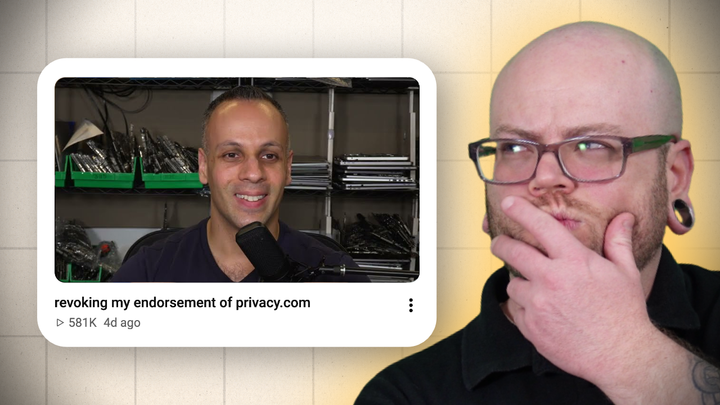
Is Louis Rossmann Right About Privacy.com?
Recently, digital rights activist and YouTuber Louis Rossmann revoked his endorsement of privacy.com. But we think this might be a problem bigger than one provider.
The iPhone the FBI Couldn’t Hack
In 2016, a locked iPhone 5C sparked a massive showdown between Apple and the FBI.
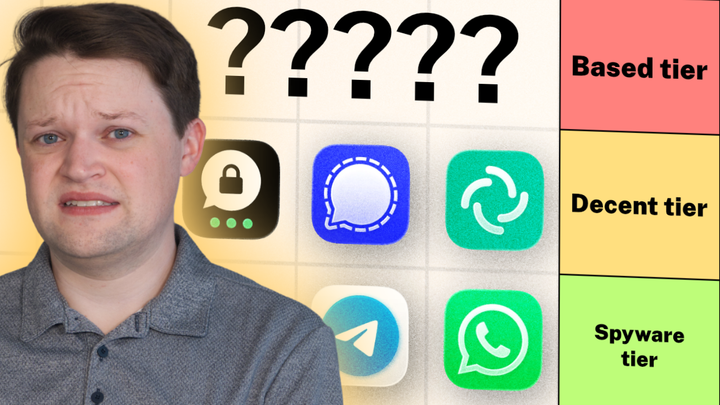
2026 Instant Messenger Tier List: Are You Secure?
We compared the top instant messengers (and the ones not quite there yet) to find out how they stack up. Let us know where your favorite choice fell, or if we missed anything in the comments!
Why Big Tech's Privacy Promises Are Lies
Melanie Ensign is the founder and CEO of Discernible and former communications lead for Facebook, Uber, AT&T, and DEF CON. She pulls back the curtain on how these large corporations operate, revealing why most internal privacy teams operate like "tax attorneys" rather than privacy advocates.
-
Trustworthy Reviews
As a non-profit project, Privacy Guides has strict journalistic standards and policies to ensure our recommendations are free of conflicts of interest, and we do not partner with providers or affiliate programs that could sway our reviews and recommendations.
-
Community-Built
Privacy Guides has a dedicated community independently reviewing various privacy tools and services. Each of our recommendations comply with a strict set of criteria to ensure they provide the most value to most people, and provide the best balance of privacy, security, and convenience.
-
Privacy: It's a human right
Much like the right to interracial marriage, woman's suffrage, freedom of speech, and many others, our right to privacy hasn't always been upheld. In several dictatorships, it still isn't. Generations before ours fought for our right to privacy. Privacy is a human right, inherent to all of us, that we are entitled to (without discrimination).
-
Activism & Awareness
In the modern age of digital data exploitation, your privacy has never been more critical, yet many believe it is already a lost cause. It is not. Your privacy is up for grabs, and you need to care about it. Privacy is about power, and it is so important that this power ends up in the right hands.
Become a member
Support our mission to defend digital rights and spread the word about mass surveillance programs and other daily privacy invasions. You can help Privacy Guides researchers, activists, and maintainers create informative content, host private digital services, and protect privacy rights at a time when the world needs it most.
Our website is free of advertisements and not affiliated with any of the listed providers.
-
Privacy Guides launches a new Activism section
— Privacy Guides launched a new Activism section on Tuesday, March 3, to support the digital rights community in its privacy advocacy and activism effort, both for individuals and organizations.
-
A Message Regarding ICE in Minnesota and the USA from Privacy Guides' Program Director Jonah Aragon
— Privacy Guides stands alongside everyone protesting in support of the protection of our neighbors and for American rights, which is something that all Americans should support.